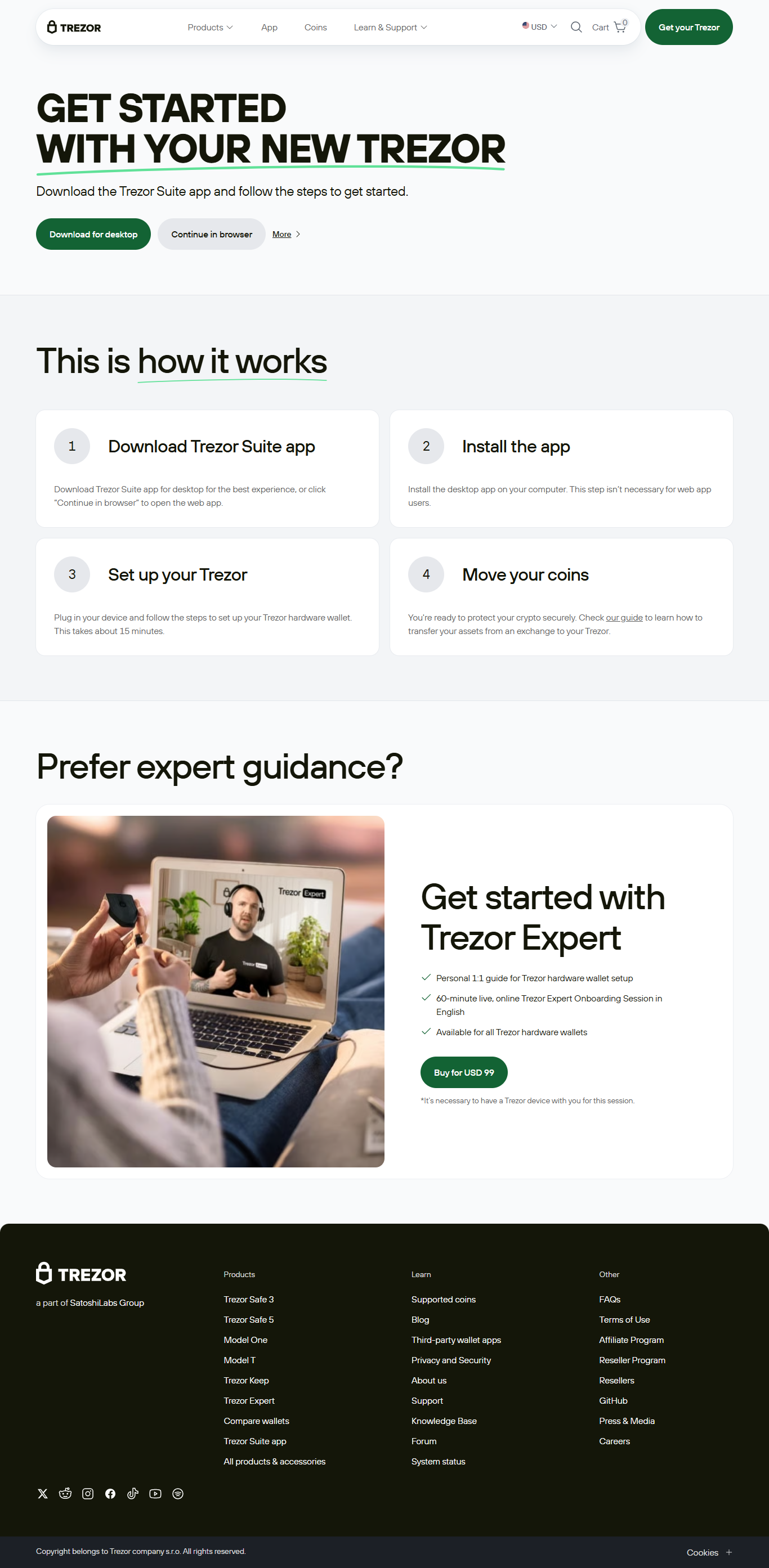
Trézór Bridge®™ | Smooth, Safe, and Encrypted Crypto Connectivity
In an age when digital assets are increasingly mainstream, ensuring secure interactions with your crypto holdings is more crucial than ever. Whether you’re new to the world of cryptocurrencies or a seasoned investor, connectivity between your hardware wallet and your application environment matters. Trézór Bridge®™ delivers smooth, safe, and encrypted communication between your device and the apps you use — ensuring your private keys remain secure and your transactions authenticated.
Making this connectivity seamless and secure is at the core of the Trezor ecosystem, just as ledger live and ledger live desktop are central to the Ledger user experience. Even though Trezor and Ledger are separate product ecosystems, the shared priority among both companies is clear: secure, reliable, and encrypted access to your digital assets. Users can get started with Trezor at trezor.io/start and explore trusted resources to implement the best practices in hardware wallet usage. Similarly, Ledger users are encouraged to begin at ledger.com/start to access ledger live and ledger live desktop for their devices.
This article dives into what makes Trézór Bridge®™ a standout solution for secure connectivity, how it works, why it matters, and best practices as you manage your cryptos across platforms.
What is Trézór Bridge®™?
At its core, Trézór Bridge®™ is a secure connectivity layer designed to facilitate encrypted communication between your Trezor hardware wallet and web applications or local management interfaces. The bridge ensures that every command passed between your device and the application interface is authenticated and encrypted, shielding private keys from exposure.
You might be familiar with similar connectivity tools in other ecosystems, like ledger live or ledger live desktop for Ledger devices, but Trézór Bridge®™ is uniquely tailored to the Trezor experience. Together, these tools help maintain secure wallet connectivity across the broader hardware wallet landscape.
Why Secure Connectivity Matters
Cryptocurrency security hinges on the protection of private keys and authenticated transaction signing. When connectivity layers are weak or unprotected, users can be exposed to malware, phishing, or man-in-the-middle attacks.
Here’s why Trézór Bridge®™ plays a pivotal role in keeping your assets safe:
End-to-end encryption: Data transmitted between your Trezor device and application is encrypted, meaning even if traffic is intercepted, it cannot be deciphered.
Keys never leave the device: Your private keys remain securely on your Trezor hardware, similar to how ledger live never exposes private keys outside the Ledger device ecosystem.
Multi-layer authentication: Authorization requires physical interaction with the device, ensuring no remote manipulation.
Interoperability: Works across operating systems and web browsers.
Whether you’re a supporter of Trezor’s open ecosystem or prefer the ledger live desktop experience from Ledger, secure connectivity remains the cornerstone of modern crypto wallet use.
How Trézór Bridge®™ Works
To understand what makes Trézór Bridge®™ essential, let’s break down the flow:
1. Install and Set Up via trezor.io/start
The journey begins at trezor.io/start, the official Trezor onboarding portal. Here you can:
Download the Trézór Bridge®™ software for your operating system (Windows, Mac, Linux).
Connect your Trezor device via USB or compatible interface.
Follow guided steps to initialize your device securely.
This setup is like the ledger.com/start process for Ledger users — where you install ledger live or ledger live desktop to manage your assets. In both systems, official start pages ensure you’re downloading authentic software and not inadvertently installing malicious alternatives.
2. Establish Secure Communication
Once Trézór Bridge®™ is installed:
Your browser or application detects the Trezor device.
The bridge software establishes a secure channel.
Commands are relayed safely between your device and application interface.
Unlike ordinary USB communication, which can be intercepted or spoofed, this encrypted channel preserves integrity.
3. Sign and Authorize Transactions
When you initiate a transaction:
The request is prepared in your application interface.
Trézór Bridge®™ sends it to your Trezor device.
You confirm the transaction physically on the device.
The signed transaction is returned securely — without exposing your private keys.
This is similar to how transactions are signed using ledger live, whether on the mobile app or ledger live desktop on your computer.
Key Benefits of Trézór Bridge®™
Encrypted Communication Across Platforms
No matter your operating system or chosen browser, Trézór Bridge®™ ensures that:
All data passed is encrypted.
Commands are validated end-to-end.
The channel remains tamper-resistant.
This is crucial whether you’re using a browser-based wallet or local software like ledger live desktop.
Zero Exposure of Private Keys
Similar to the ledger live security model, Trezor’s connectivity never transmits your private keys outside the hardware wallet. This eliminates a major attack surface and preserves full custody.
User-Friendly Experience
Despite its advanced security, Trézór Bridge®™ remains simple to use:
Plug in your Trezor device.
Install the bridge from trezor.io/start.
Open your management interface and connect.
For Ledger users, ledger.com/start provides a similarly streamlined on-ramp to the ledger live ecosystem.
Best Practices for Secure Crypto Connectivity
To maximize the security benefits of Trézór Bridge®™:
1. Always Download from Official Sources
For Trezor connectivity, use trezor.io/start.
For Ledger setup, use ledger.com/start to install ledger live or ledger live desktop.
Downloading from unauthorized sources increases the risk of malware or altered software.
2. Keep Your Firmware and Software Updated
Both Trezor and Ledger periodically release updates that improve security and compatibility. Update your devices regularly — this includes the bridge software and management tools like ledger live.
3. Verify URLs and Connections
Whether you’re using Trézór Bridge®™ or ledger live, always verify you’re on the correct domain. Never enter sensitive seed phrases or passwords into unsolicited prompts.
4. Backup Your Recovery Seed
Your recovery seed is the ultimate access key to your assets. Store it offline in a secure, private place. Even if your connectivity software is secure, losing your seed can be catastrophic.
Trézór Bridge®™ vs. Other Connectivity Tools
While different hardware wallet brands provide their own connectivity solutions, the principles remain consistent:
FeatureTrézór Bridge®™ledger live / ledger live desktopEncrypted Communication✔✔Keys Stored Offline✔✔Cross Platform✔✔Browser Compatibility✔Limited (desktop focus)Requires Device Interaction✔✔
Each ecosystem has its strengths, but encrypted connectivity and key isolation are universal pillars.
Why Connectivity Stability Matters
Crypto transactions are irreversible. A mis-signed transaction or compromised private key can result in permanent loss of funds. Tools like Trézór Bridge®™ provide the reliability required for secure interactions so that every action taken reflects the true intent of the user.
Even when comparing protocols like ledger live desktop with the browser-based bridge solution, the focus remains the same: secure, authenticated, and smooth communication between user and asset.
Final Thought
As cryptocurrencies continue maturing, safe connectivity between hardware wallets and management interfaces becomes more than just convenience — it becomes a cornerstone of digital asset security. Trézór Bridge®™ exemplifies how advanced connectivity can be both seamless and encrypted, providing a secure pathway for your interactions with the blockchain.
Whether you prefer Trezor’s device ecosystem beginning at trezor.io/start or Ledger’s experience with ledger live and ledger live desktop via ledger.com/start, the principles of strong connectivity and encrypted communication remain fundamental.
By implementing secure tools and following best practices, your crypto experience can be smooth, safe, and future-ready.
Frequently Asked Questions (FAQs)
1. What is Trézór Bridge®™?
Trézór Bridge®™ is a secure software layer that provides encrypted communication between your Trezor hardware wallet and applications or browsers.
2. How does Trézór Bridge®™ work?
It establishes an encrypted connection, relays commands securely, and ensures that private keys never leave the device.
3. Do I need Trézór Bridge®™ to use my Trezor device?
Yes — for most web-based or browser-integrated wallet interactions, the bridge ensures compatibility and secure communication.
4. What is ledger live?
ledger live is the official Ledger wallet management software used to interact with Ledger devices.
5. Can I use ledger live desktop on any computer?
Yes — ledger live desktop is downloadable software for Windows, macOS, and Linux from ledger.com/start.
6. Are private keys ever shared?
No. Both Trezor and Ledger systems ensure your private keys stay offline and never transmitted.
7. Is Trézór Bridge®™ safe?
Yes. It uses encrypted channels and authenticated connections to maintain high security.
8. Where do I start with my hardware wallet?
For Trezor, begin at trezor.io/start. For Ledger, use ledger.com/start.
9. Does the bridge work on any browser?
Yes. Trézór Bridge®™ supports major browsers compatible with secure hardware wallet connections.
10. Can I manage multiple currencies?
Yes. Both Trezor and Ledger ecosystems support a wide variety of cryptocurrencies.